
Pickleball Doubles Positioning Tips
Prefer to listen? Tap play below!
Mastering Pickleball Doubles Positioning: Tips for Winning More Rallies
As the fastest-growing sport attracting players of all ages, pickleball is full of thrilling, nonstop action. In doubles play, where most pickleball is enjoyed, positioning is crucial to a team’s overall dynamic while covering the court.
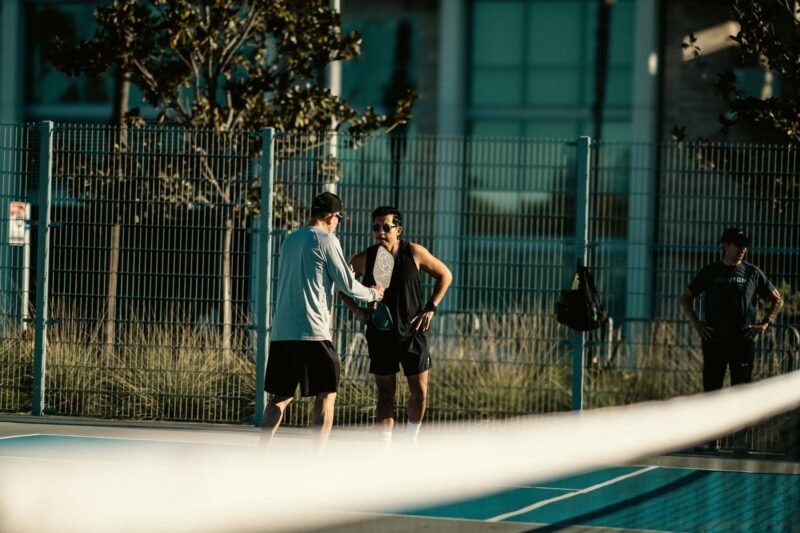
Where you stand in conjunction with your doubles partner, and relative to your opponents, directly control the success of your shots in the course of point rallies. Developing a knack for placing your body in particular positions on the court is a skill every player needs to master.
Understanding Pickleball Doubles Positioning
Doubles pickleball is just how it sounds, it’s you and a partner versus two others. Singles is quite different, but doubles is a much more strategic, team-based game, which makes it so much fun. You’ll need to learn to cover and protect the court. Which way are they moving? What’s your strategy together? It requires being in good position with them and on the court and being able to follow that up after selecting your shot. Keep reading to follow our guide and improve your chances of winning!
Key Pickleball Positioning Strategies
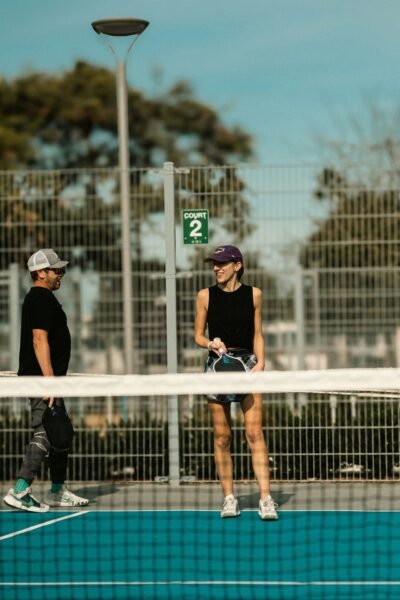
The “ready position” is crucial in pickleball because it’s how players set themselves up for success on the court. You “get ready” by slightly bending your knees, with your feet your shoulder’s width apart, paddle out in front of you so you’re light on your feet. Why? It’s the optimal stance that is most likely to maximize balance and agility allowing swift, responsive subsequent steps in follow-up to an opponent’s pickleball shot.
Enhancing Pickleball Teamwork
Partners in any sport must communicate effectively, especially during rallies. Partners could discuss voice commands the night before or the morning of match day and get on the same page about what signals will work for both. Partners could also offer each other simple nonverbal cues, like hand signals, to one another so that a common language is developed between them. The common hand signals are: an open hand signals a post-serve switch, a closed fist means stay put, and a talking hand fakes a switch to mislead opponents before returning to the original side.
Effective Pickleball Tactics for Winning Rallies
The ability to anticipate where your opponent’s shot is going next is such a critical part of doubles play. Look at your opponent’s body and where they’re physically located on the court. For example, anticipate a shot that will be hit near the baseline if your opponent’s weight is shifting back and you see them moving back. Go ahead and make a pre-emptive move right on the NVZ line.
This is exactly the place where you want to be if you’re going to attack a shot or try to anticipate where you can make a play. Doing this a few times per game might actually expose your opponent’s strategy, but most importantly, it will allow you to get in a shot at or near the NVZ line!
In other words, anticipate the next move on the court and dictate how the pace and tempo of your next volley will either be won or lost at the NVZ line. After all, effectively dominating this zone of the court will help make your opponent’s job all the more difficult.
Common Mistakes in Pickleball Doubles Positioning
Many people playing doubles pickleball do not share the “work” with their partner. Instead, both players go to the net. I would suggest that one player goes to the net while the other player is further back from the kitchen. From there, you will “move” your opponent while creating opportunities for a winner or to have both at the kitchen. This new division of space creates a situation where you control the pace of the game. You move your opponent from what I call “power alleys,” space close to the lines.
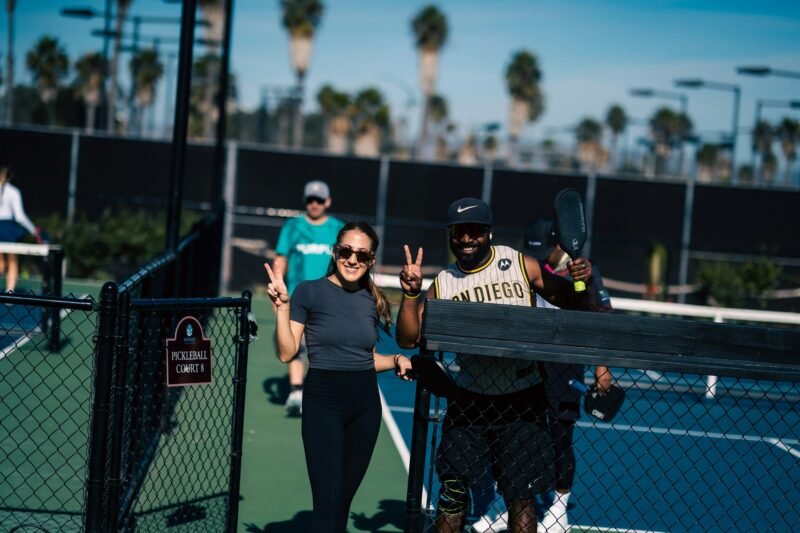
It’s common to not know where to be on the court. This sort of spatial awareness often loses you points. To address this, work on reading “paddle-facing” with live feeds. If you can read the angle of the paddle, you can generally tell where the ball will go.
Effective positioning on the pickleball court is key to winning as many rallies as you can. Knowing where you should be standing allows you to predict where your opponent’s next shot will land, meaning that you can get where you want to go faster. You can’t do it alone, though; your partner needs to move with you. A lot of communication is needed to make sure that you both move as one. There will be additional tactics that you can use, both moving to the net (volleying) as well as playing lateral (lobbing), and depending on where you are playing, being able to move in these ways can lend an advantage. It’s all about practice. After a while, you will begin to do these things naturally. Try out some of these strategies in your next doubles match you play and see how you and your partner do.
