
Pickleball Drills for Better Reaction Time
Table of Contents
Prefer to listen? Tap play below!
Sharpen Your Reflexes: Essential Pickleball Drills for Better Reaction Time
Reaction time is crucial in pickleball. It can make or break a game. A player can anticipate with their reflexes and react fast enough to take advantage of opportunities to score. For intermediate players who want to get better, it is necessary to do pickleball drills for reflexes.
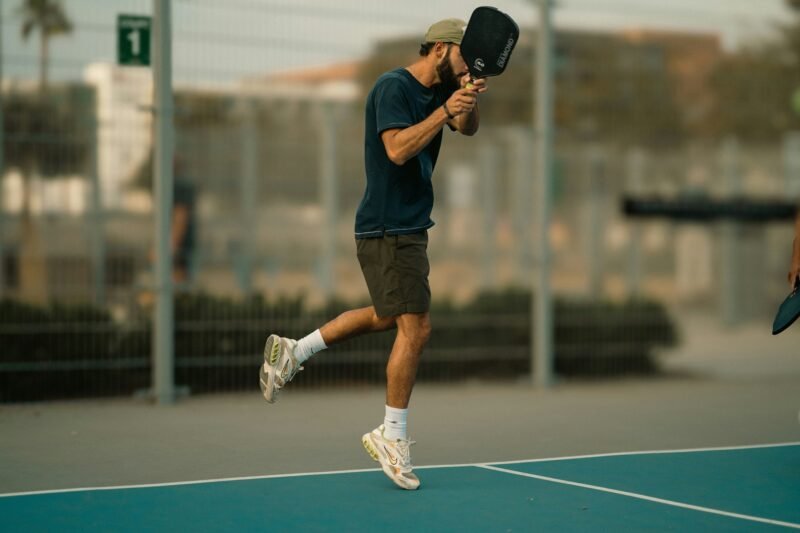
Why are they helpful? They help you to improve your reaction time. Doing specific drills like rapid-fire volleys, following the ball, and agility ladder drills can help you shave off two-tenths of a second. And these two-tenths of a second are precisely what can determine if you win a game in pickleball or not. But that’s not all. It’s not just about winning a game in pickleball, it’s about the love of the sport and the ambition to be a better player. Train drills for reaction with love. Do your own specific training on them and see how much effect they have on your game.
Understanding Reaction Time in Pickleball
In pickleball, reaction time is defined as the time elapsed between identifying an opponent’s hit and the split-second decision a player makes about how to best respond. Given that pickleball is played at a fast pace compared to other similar sports, reaction time is critical for players to be able to anticipate when and where to move and improves their shot options.
Reflexes are also a large component of enhancing a player’s overall physical sport. A pickleball player’s reflexes help to develop his or her reaction time, game skill, court position, and hopefully shot selection.
Incorporating Reaction Drills into Your Training Routine
Drills need to be part of your regular practice if you are looking to develop your skills and improve as a player. Given the importance of regular practice vs. the one-off lesson and game time, plan for 15-20 minutes of dedicated practice on, for example, your serve, dinks, third shots, or volleys. In this way, you are guaranteed to obtain consistent practice on the shots that are fundamental to our game.
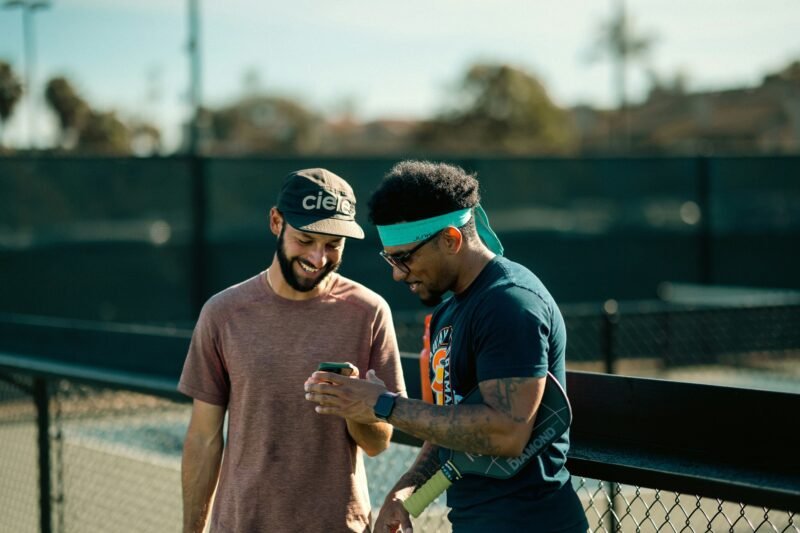
How are you keeping track of your progress?
Check your progress to further motivate your learning. Use a journal or one of the apps you can download that uses your phone’s video to check your serve, your groundstrokes, or volleys. Or, just keep track of the number of times to get a ball in a certain area to help trace your growing effectiveness. Gradually scoring more hits or where you hit will indicate how you place your successful volleys at open court spots.
Why Intermediate Players Should Focus on Reaction Drills
For the intermediate player, pickleball can be uniquely challenging. You are no longer on the front lines with the predictable, beginner-paced games. The people you’re playing against are smarter. Advanced training to get better reflexes could change the way you perform overnight. You know that if you can improve your technique and reflexes, you can get to the point where you can predict and then play your shots. This is a huge sticking point where advanced training comes in.
Top Pickleball Reaction Drills to Sharpen Your Reflexes
If there’s one thing pickleball players are looking to improve, it’s their reaction time. This skill can drastically change one’s performance. Here’s a list of top reaction time drills that you can weave into your everyday routine. Whether you’re just starting or a pro, these drills often simulate quick decisions just like in a real-game scenario.
Drill 1 – Agility Ladder / Ladder Run
The first step to having a faster reaction time is to increase your endurance. The more energy you have, the less fatigue you’ll feel as the game goes on. You will quickly step through a series of rungs. Along with foot speed, this workout can improve your cognitive processing ability because you have to focus your attention on your lower extremity mechanics. If you practice these drills consistently, your brain will adapt accordingly; you can only get better!
Drill 2 – The Quick Hands Drill
One good drill to improve your pickle game could involve a partner who hits all kinds of balls at you with the purpose of making a proper shot back. Shots could be made at different speeds and from different angles. This will also train you and your partner’s reflexes. In order to perform this exercise properly, players must train by acting like they’re in a real match. Players should always be in a ready position and be ready to take any kind of shot. After much training with this kind of style, players will feel the improvement in their overall performance in no-time. Additionally, you could always speed up at some time, incorporating other elements like volleys, dinks, lobs, etc. Most of the time these elements will always occur, making it invaluable to practice from time to time.
Drill 3 – The Reaction Ball Drill
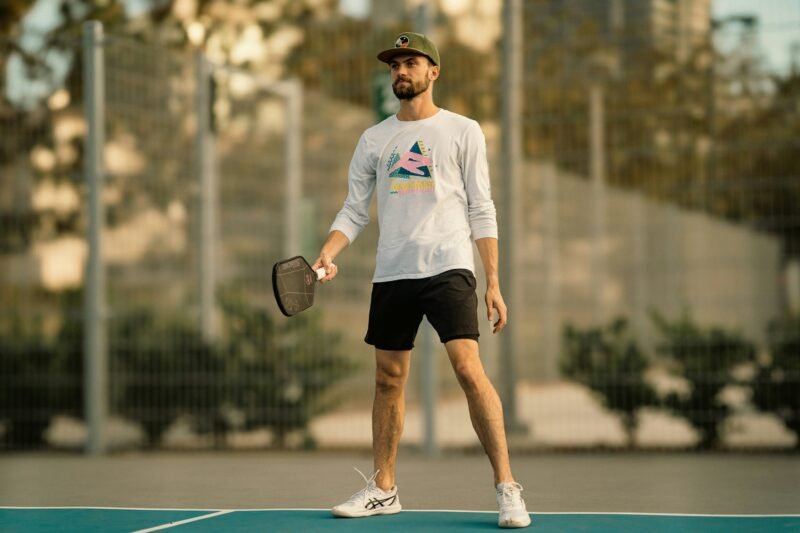
Pickleball reaction drills are designed to train your reflexes and the reflexes of your partners. These drills usually include quick movements and decision-making scenarios. An example of a drill like this is when a partner throws a ball randomly to different areas of the court and you’re expected to return each ball with accuracy and speed. This training improves eye-hand coordination and provides agility practice, teaching a player how to quickly decide where to move to return a shot.
Some advanced drills include using a smaller or different-colored ball. Serve balls to the players more quickly. Place cones on the court and have players work around the obstacles. Call out the color of the ball just before the player hits a return shot. Have the player return different-colored balls in different ways. Have the player call out the colors of the balls he hits.
Drill 4 – Partner Reaction Drill
To perform a two-player drill, each of you will stand on opposite sides of the net. First, pick a shot to repeatedly hit to your partner (volleys, dinks, etc.). Then hit that shot back-and-forth only. Call out your shot when you hit it, which has a number of benefits.
First, it emphasizes clear communication, an important aspect of any successful doubles pickleball team. Be clear about what you’re going to do. Second, the drill works on anticipation because you’ll learn your partner’s habits. Grab a notepad and study their tendencies; it could mean the difference between a win, and a loss. Where do they like the ball? Where do they dislike the ball?
Drill 5 – Target Practice Drill
To set up your own reflex-building drill in pickleball, all you need is a partner and a couple of extra balls. You stand about 10 feet apart, your partner is going to toss the ball to you completely randomly (varying the height, the angle, the velocity, etc.). This instability forces many things on your brain and hand-eye coordination, you have to keep your overall reflexes in top shape! You also get to hit specific shots, mainly volleys, groundstrokes, etc. During this drill, you can adjust the pace, as well as deciding if you should add obstacles. In the final application of this drill, you also get to work more on your targeting skill.
Improve Your Pickleball Reaction Time with Practice
For beginners who should consider themselves at the intermediate level, you need to start training with specific pickleball drills that force you to make quick movements and decisions. These are going to be things that force you to work on your general strength and agility and overall explosiveness! As always, practice is not just about working on exercising your body for increased performance, it’s also for your technique.
Other Articles
Pickleball Tips for Playing with Kids
Pickleball Tips for Playing in Small Spaces
Pickleball Tips for Playing with a New Partner
Pickleball Tips for Playing in Tournaments
Pickleball Tips for Playing Against Aggressive Opponents
Pickleball Tips for Mixed Doubles Teams
Pickleball Tips for Left-Handed Players
Pickleball Paddle Materials Compared
Pickleball Tips for Playing Outdoors
