
Pickleball Tips for Playing in High Altitude
Table of Contents
Prefer to listen? Tap play below!
Mastering High-Altitude Pickleball: Essential Tips for Travelers
Pickleball has exploded and players of all ages are taking their paddles and looking for a new thrill. Recently we have seen high-altitude locations like Colorado and Utah become the destination to play. Games are commonly being played at an elevation over 5,000 feet. At this elevation, games are being played differently. Players must adapt to the elements in order to win their match. Just like physique and athletic conditioning are often deciding factors in pickleball, once in Colorado and Utah, these skills may instantly become obsolete, as serves and volleys that were dropping perfectly into the kitchen have more air time making them out of bounds. This is your guide to conquering the game and nature. For beginners, do not rush the process.
Understanding High Altitude and Its Effects on Your Game
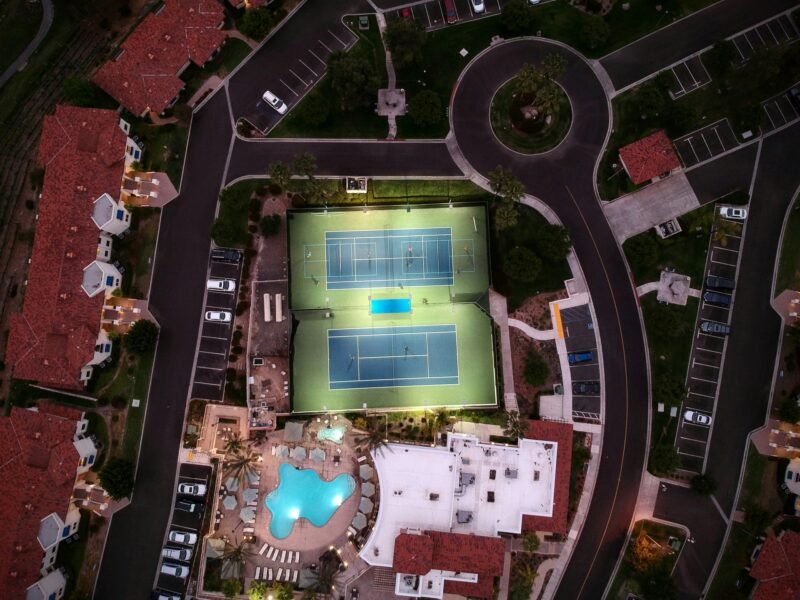
High altitude is generally considered as a height above 2,400 meters, or 8,000 feet, where our atmosphere thins out and the level of oxygen available decreases. This can be a disadvantage for athletes because our bodies need oxygen for any muscular contraction. The air pressure decreases, the UV radiation increases, and it is often much colder at higher altitude.
Many sports that require athletic performance will benefit from an increase in oxygen. Unfortunately on long rally points, I notice that my reaction time decreases noticeably due to the lack of oxygen available from staying at a recreational center located at 5,365′.
Essential Pickleball Tips for High-Altitude Play
Playing at high altitude has a couple of other effects that could add to some subtle changes in your game strategy. The biggest challenge will be that the ball tends to fly through the thinner mountain air faster than at sea level. You will need to adjust your timing and the direction you aim your shot. On the plus side however, this probably means you’ll be able to add a bit of extra speed and topspin to all of your shots, so you should consider being a bit more aggressive in your shot selection.
The second effect will be that you’ll have to make sure you use your energy wisely. This probably means your initial strategy should involve a good bit of rallying, at least until you get your breath back, and waiting for your opponent to make a mistake.
Adjusting Your Pickleball Strategy
High-altitude conditions can have a drastic effect on performance as a result of the atmosphere’s lower air pressure and decreased oxygen levels. To play successfully, one must adjust the serve to deal with high-altitude conditions. Reducing the follow-through can impart more control and accuracy. This will allow the ball to travel with the same spin and speed as it would under normal serving conditions. Practicing the serve under a variety of conditions can improve the serve. This will ensure the serve can develop the rhythm and timing needed to hit a big serve with control. By learning to hit serves with power, this will teach the body to serve with different power levels. Adjusting the power of the serve can help guide you on the power control of your other shots.
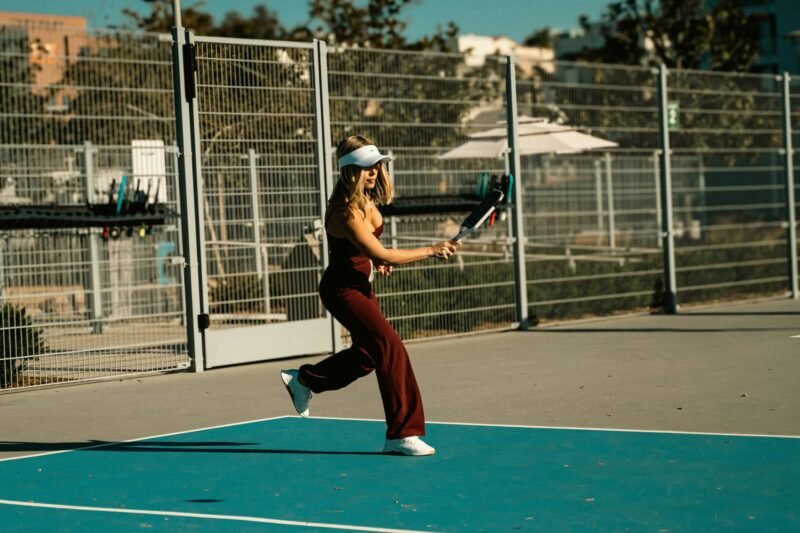
At the net, playing high-quality volleys is also more difficult. Having to use a lot of wrist and power will make developing the shot timing and rhythm more difficult. Aim to volley the ball high up and over the net.
Preparing for Your Pickleball Travel Adventure
Playing a game of pickleball in high-altitude destinations requires some important preparation, most notably hydration. At higher elevations, there is a lower barometric pressure meaning that the air is thinner. This leads to a greater loss of bodily fluids. You must replace these fluids before, during, and after a game. Have a water bottle on hand so that you can sip every now and then. Regular water is great, but electrolyte-infused beverages offer added performance and recovery benefits because they replace the minerals and salts lost in sweat.
The change in elevation also requires a player to be acclimatized. This will drastically reduce the likelihood of you getting altitude sickness. So aim to arrive at the location a few days before the match. During this time, engage in light physical activity as this will help you get used to the altitude and prepare you for the demands of pickleball.
Gear selection is equally important. Your favorite paddle, breathable exercise clothing, and comfortable, proper-fitting shoes are great starting points. Lastly, one very important part of your warmup is performing some simple dynamic stretches. These will only require an athlete to spend 10–15 minutes of their pre-game routine, but may increase the likelihood of avoiding injury and ultimately increase their performance.

Staying Hydrated and Healthy While Playing
Hydration and nutrition are two very crucial strategies needed when playing games at high altitudes. Since most people know that air gets thinner the higher you go, it’s probably no surprise that in such thin air, the body has to work harder. This means our body uses up our stored energy sooner. However, at high altitudes, water leaves our bodies sooner as our respiration and perspiration rates increase, leaving us more susceptible to becoming dehydrated which speeds up when fatigue happens, causing our performance to be lower than we want. To combat dehydration, plan to consume large amounts of water before, during, and after the match. A good trick to try is to consume sugar-free electrolyte drinks to aid in the process of absorbing regular water back into your cells. In addition, it’s helpful to focus on eating food that contains proper energy sources such as a mix of complex carbohydrates, lean proteins, and healthy fats such as whole grain foods, fruits, nuts, etc. Hydration and a good balanced mix of macronutrients together are keys to performing optimally at high altitudes. Once you have finished your games, focus on consuming food that provides a good mix of macronutrients to aid in the process of recovery and reloading your energy stores.
Playing pickleball in the mountain air offers a unique set of circumstances that can affect your game. Not only do you need to adjust your serve and other shots, from the thin mountain air that will make your balls travel fast and fly far, but you also need to prepare for a match at that altitude. The thin mountain air means less oxygen for your muscles to utilize and you will tire faster.
Consider preparing for your next pickleball tournament or other pickleball adventures by adjusting your techniques. Whether through a mindset shift, a practice regimen, or another pickleball technique, consider incorporating these settings and strategies into your practice.
