
Pickleball Tips for Playing with a New Partner
Prefer to listen? Tap play below!
Pickleball Tips for Building Chemistry with a New Partner
With its fast pace, engaging play, and broad appeal to folks of all ages, pickleball has had a major surge in popularity over the last few years. One of the most critical components of any player’s game, if you’re competing in doubles play, is that elusive little gem, chemistry. The ability to read each other’s wants, needs, and desires in the thick of the battle. Even if you have just met your partner, chemistry makes everything work. You cannot work toward achieving full teamwork without good communication skills. Whether you meet in warmups or live action, discuss what you like or don’t like about your game. Identifying your strengths and weaknesses as a couple early in your partnership will make you a much better-rounded team. Maybe you realize that you are better suited for the power game with a particular partner; strategize about that going into a match.
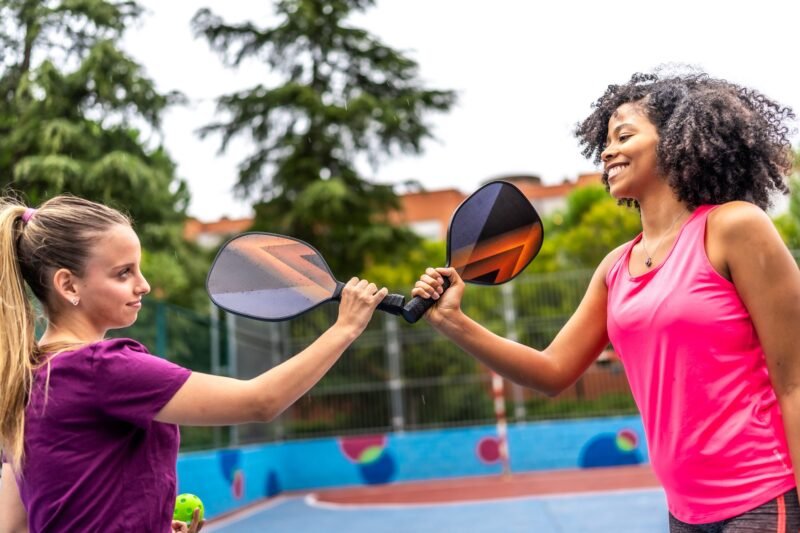
Team of two multi-ethnic women clashing rackets before playing pickelball in an outdoor court
Understanding Your Partner’s Style
Knowing how your partner normally plays the game is an important part of forming any kind of team. It’s rare for anyone to be good at everything, but many of us have at least one or two things that we’re pretty good at. Analyzing the different aspects of gameplay among one another can help determine strengths and weaknesses and allows for everyone to form a game plan in their own way using those strengths to the team’s advantage.
Before the game begins, if possible, sit down with your partner and have a quick discussion on game styles, preferences, and individual setups. Many players find these types of conversations to be enjoyable and often interesting to learn about. It’s a fantastic way to break the ice, get the discussion ball rolling, and allow players to get to know you a bit better and what you might be capable of before the game begins.
Effective Communication on the Court
Clear, direct communication is the key of any group. It helps in a number of ways. First, when you verbalize your thoughts well, you eliminate confusion. Often, individuals on teams will keep silent or nod in agreement when they are given instructions that they don’t fully understand. There’s no denying that issues can arise. Most people prefer to know exactly what their team wants from them and will work better when they feel included in decisions that benefit their team.
Use non-verbal cues like body positioning and facial expressions to convey enthusiasm. Smiling and maintaining a more relaxed but confident expression will benefit the team in a positive way. Your partner will respond accordingly and become more expressive. Other confident body language tricks or tips include tucking the chin outward and looking up.
Developing a Winning Strategy Together
It’s important to have a game plan before we begin. That way, we don’t have any confusion about our role and the roles of the other people around us. We have a shared vision and the roles and responsibilities to get us there.
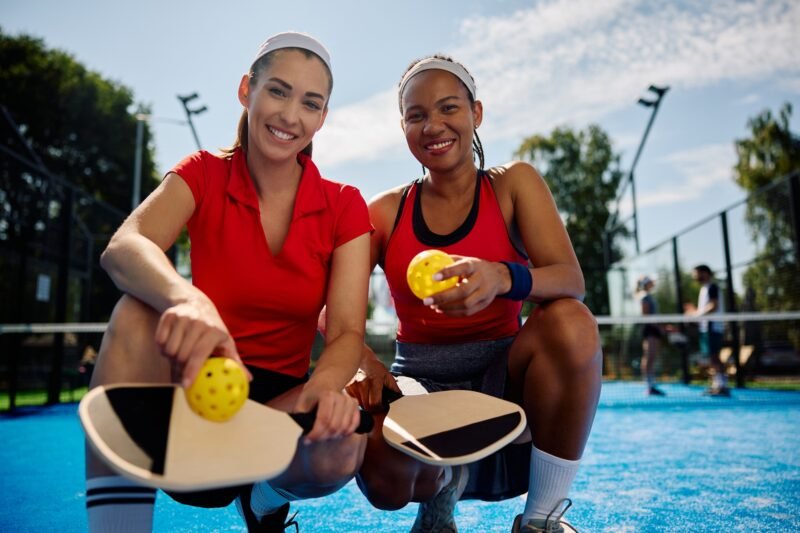
Happy women playing doubles in pickleball on outdoor court and looking at camera.
The ability to be responsive to your partner’s position means you are using your skills in sync with your partner’s skills. Moving in unison, using both partner’s strengths makes a great partnership! After all, if one person is using their strength to offset another person’s weakness, there is an increased level of knowledge, respect, and trust.
Mastering Court Positioning
Getting positioning right in doubles play can make a significant difference in maximizing your court coverage and minimizing gaps that opponents can exploit. Each player has to know their zone so they can maintain a balanced formation. Make sure to have some communication with your partner about shot calling and signaling. Addressing these types of issues early on will help make sure there are no overlapping zones so both players can play with more zone separation. The standard is for one player to play at the net while the other player gradually comes to the net with resets and drops. This helps at both high and low levels of doubles play. In this way, they can cover almost all kinds of possible shots. One player will be in place for volleys while another player can cover potential groundstrokes.
Shot Selection and Decision Making
Choosing the right shots for a moment in a rally is a combination of two elements: understanding where your partner is and the weaknesses of your opponents.
Your partner’s position: If your partner is at the back of the court, it may be better to play a high and deceptive shot to the backcourt of your opponents. If your partner is at the front of the court, an aggressive long hit to the backfield may be less advantageous because it does not set your partner up for a strong put away.
Your opponents’ position: Knowing your opponents’ poor habits or weak skills can be a huge advantage during the game. If you notice that they have poor backhand returns during in-game warm-up, be sure to exploit their limitations by aiming for their backhand side. Practicing quick decision making during in-game moments can help perfect your natural, reactionary decision making.
Building Chemistry Through Practice
Practice times are so important in building team chemistry and understanding. That’s when individuals connect, team members learn to trust one another; they know they have to collaborate. The more they practice, the better they understand each other’s strengths and weaknesses, and the better they can perform during games, events, or tournaments.
Some teams build drills into their practice times. These are specific activities meant to improve teamwork and communication. Some drills to incorporate are: fast hands, dink battles, drive and drop, and serve and return.
In this article, I discussed key pickleball tips you and your new partner should follow. These range from communication tactics, discussing strengths and weaknesses, and understanding the strategy you’ll play during games. Doing so will increase the fun factor, reduce your team’s errors, and improve your overall team performance during games. I encourage everyone to remember these tips when you play your next game of pickleball. And for those of you who are about to play their first game of pickleball, enjoy! Playing pickleball for the first time is something special!
Other Articles
Top 10 Pickleball Mistakes (And How to Fix Them)
How to Play Pickleball: A Beginner’s Guide to Rules, Equipment, and Strategy
Pickleball for Seniors: Tips & Benefits
Competing with More Skilled Pickleball Players: Winning Strategies
Strategies for Precision & Control: Mastering the Soft Game in Pickleball
The 10 Mistakes You’re Making When Dinking in Pickleball (And How to Fix Them)
How to Beat Pickleball Bangers: Strategies for Smart Play
Pickleball Sportsmanship: How to Play with Respect & Integrity
Finding the Sweet Spot: How to Maximize Your Pickleball Paddle Performance
